"A man with new ideas is a madman, until his ideas triumph"
Ben Hougardy
Your friendly neighbourhood IT guy
Currently stationed at a Law firm in Jersey, Channel Islands.

About Me
In 2022, after over 15 years in the hospitality industry, a life-changing event put things into perspective and prompted me to make a decision that would take my life in a whole new direction.
I was going to be a dad.
Fast-forward to today, the years have gone past in a flash. The career switch I had never realized I always wanted still gets me looking forward to going into the office every morning.
That's because the job of a Service Desk Analyst is never boring. Dipping your knowledge toe into all different areas of IT almost daily. A bit of OPsec, Infrastructure, Cloud computing, development, and app support keeps the job feeling fresh with always a new challenge or project to get stuck into. But it does make it hard to decide where to specialize!
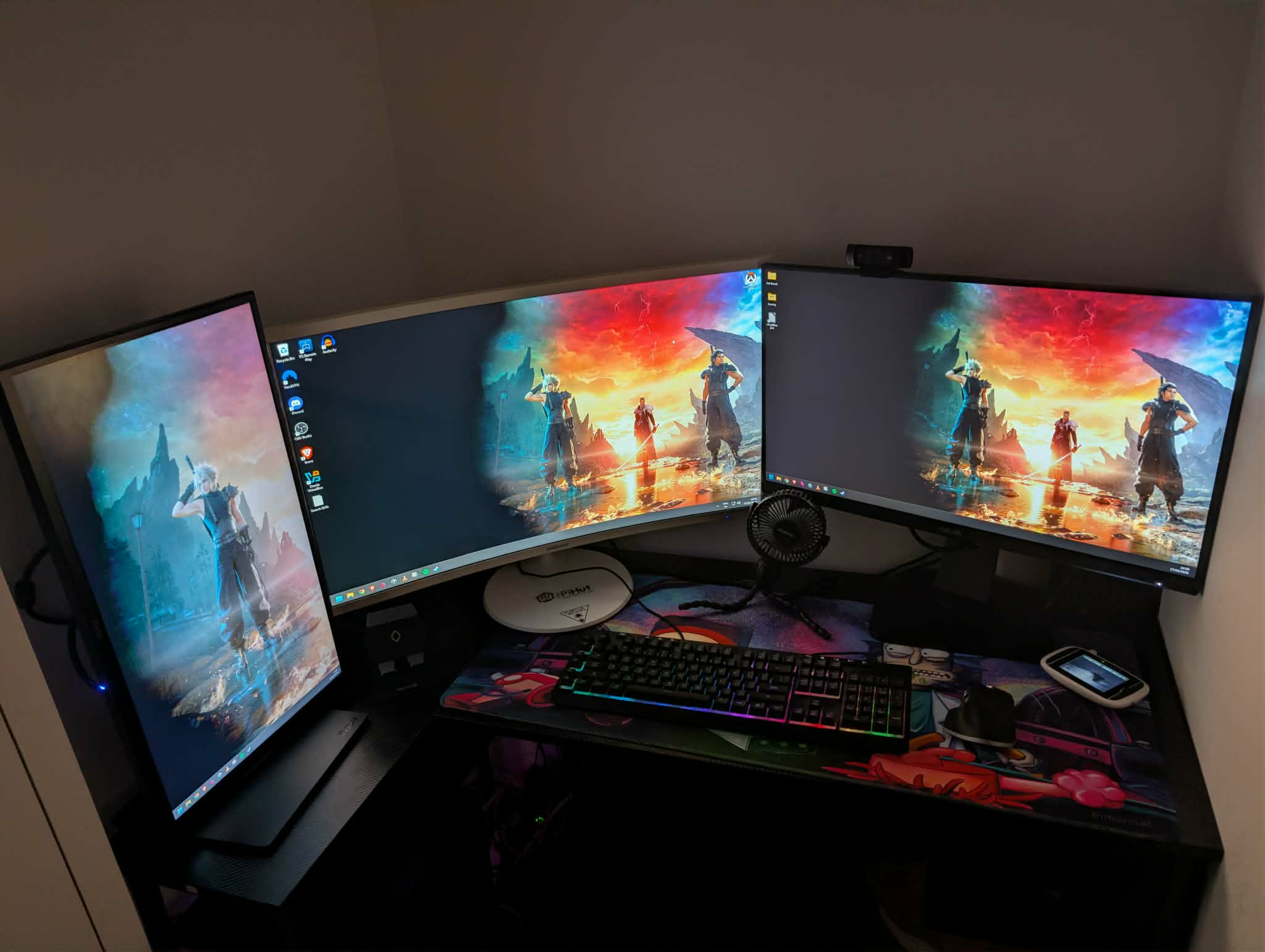
In my tiny electric cupboard that's since become a bitesize computer lab, mini home projects take up most of the spare time not committed to my family... or football.
Depending what YouTube video I've come across, been inspired by at work, or what I've decided that my house, in my opinion, apparently now NEEDS to have, shapes a project for the coming weeks/months.
- ▹ Linux Machines
- ▹ Docker Containers
- ▹ Home Network Routing
- ▹ Cloudflare
- ▹ Twingate & ZTNA
- ▹ NAS/Personal Cloud
Project Blog
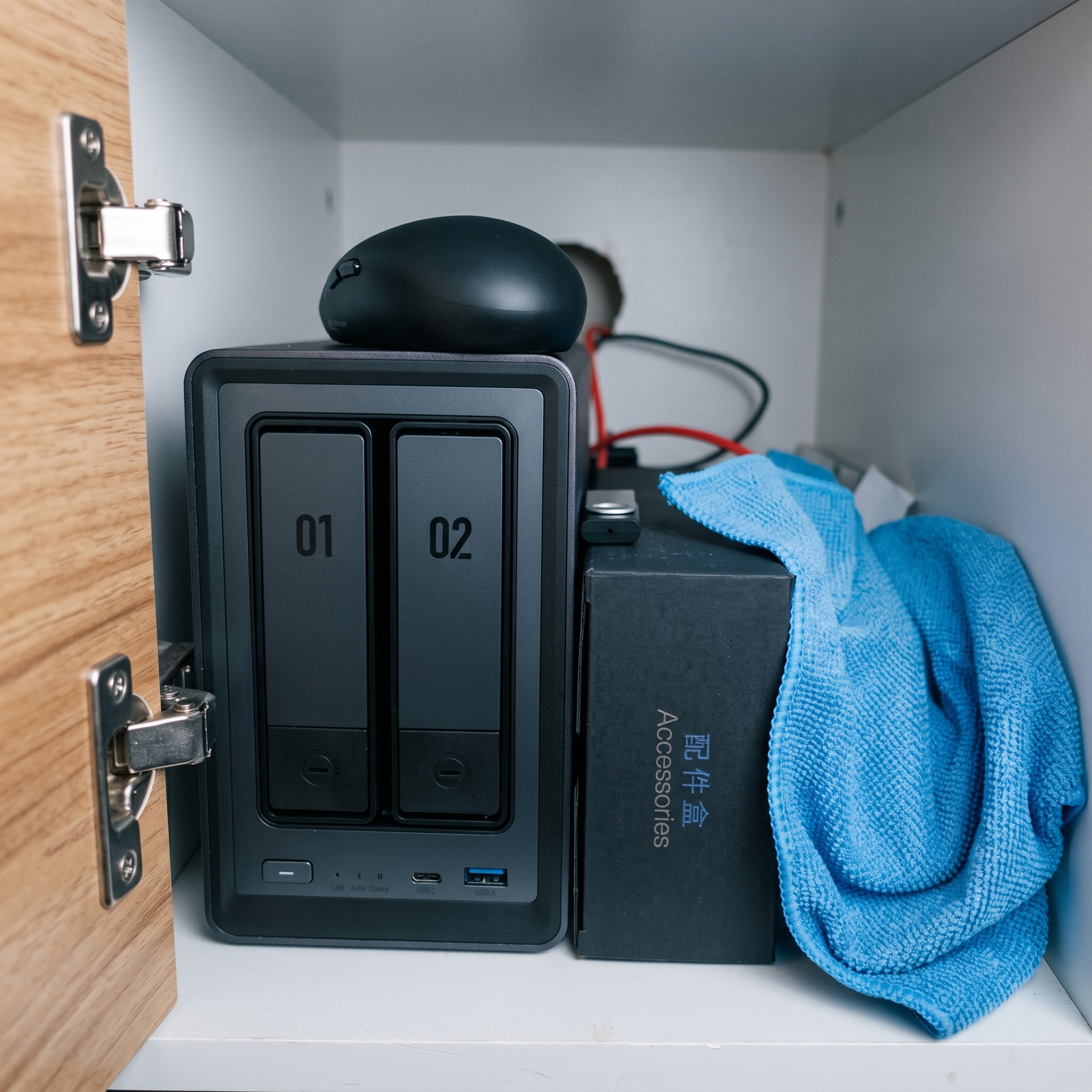
Since starting in IT, I've always wanted a NAS. The idea of hosting my own applications and cloud storage was mind-blowing and just HAD to be done.
There was only one hurdle... finances. I found out quickly that NAS devices are NOT cheap. So when Amazon Prime day was approaching, the research began! Ugreen was relatively new on the block in the NAS market at the time. Along with its nice GUI, cheap price, and good reviews (after hours of reading and watching), it was ordered. Then came the hurdle I naively didn't expect: HDD prices were through the roof! Thanks AI...
The NAS sat there, unoccupied, for MONTHS before I could finally get my hands on them.
Once acquired, I was like a kid in a toy shop! Spin up a Docker container to block ads on my entire network via Pi-hole, set up a secure cloud drive, rip my DVD boxsets, and create my own video streaming service with Jellyfin! On and on it went.
Then the thought: what if I want to access my Jellyfin server from outside my network, safe and remotely? And if I do that...
There lies the IT thought mentality. Have one idea, three more branch off it. Buy a NAS because it'll be fun to configure access to files across a network. Then before you know it, you're writing, building, and hosting your own website...
Port forwarding, a part of one of my first projects.
I set up a media file server using the app 'NextCloud' on an Ubuntu server installed on an old laptop, mapped an old portable SSD, then set up the port-forwarding rule on my router for external uploads and downloads.
This was cool! My own server where my family could upload pictures and videos!
A couple of months went by and my ever-changing focus had turned to Cyber Security. Some podcasts, YouTube videos, and forum posts later, and my paranoia peaked. I was being watched through my webcams!!! There were people looking at my laptop screen!!! Or not... but just in case a random scan clocked the open port into my network, I downloaded the data locally, pulled the plug, and turned off the forwarding.
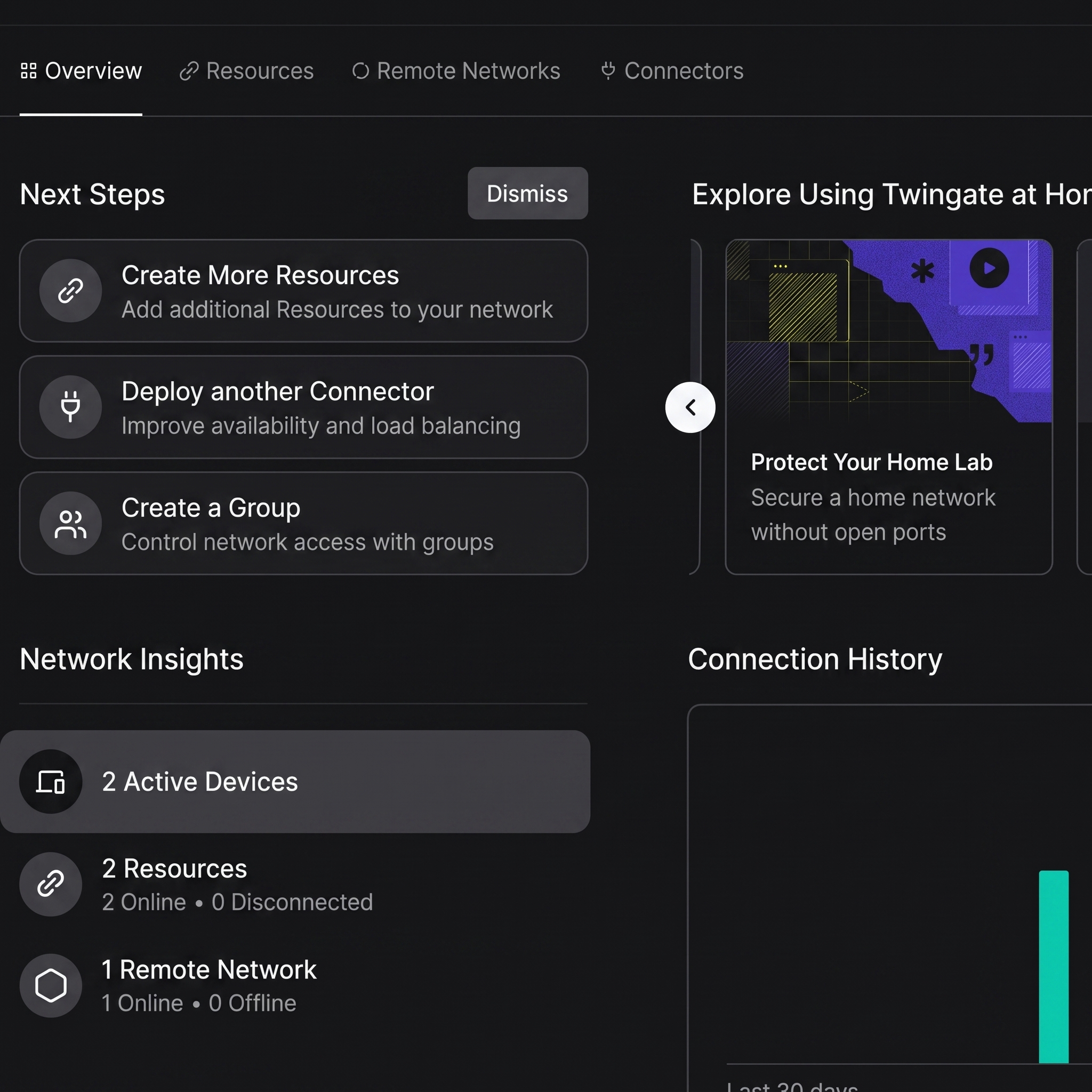
It wasn't until years later that I wanted remote access to my NAS and discovered Twingate. I deployed a secure, zero-trust remote network tunnel into my home network, routing traffic safely alongside my router (GL.iNet) configurations without opening a single vulnerable port. Winner!
I wanted, and now have, my network and files to be secure. If someone DID manage to get in, I'd probably be just as much in awe as I would be annoyed. Reach out for a virtual handshake and ask "How did you do that?!", meanwhile shutting down my entire network and starting from scratch...
Before switching careers, there was one thing I knew I needed if I was to have a hope of getting a job. A certification.
The CompTIA A+ was certainly the grind I had not expected. I thought I knew my way around devices and OSs pretty well until I started studying for this.
Studying often feels like nothing is going in, and with such a broad spectrum of different things to learn and understand, I felt like I may as well have been trying to learn to speak binary (ironically, we actually did have to learn a little).
The grind paid off though, passing both exams on the first time of asking and getting my first job.
Not realizing it until well into my second IT role and first Service Desk job 14 months later, the exam had taught me an invaluable troubleshooting tactic which, years down the line, I still adhere to every day: I Think The Plan's Very Dumb.
- IDENTIFY - Identify the issue.
- THEORY - Construct a theory that may be the solution.
- TEST - Test the theory.
- PLAN - Plan how to address and action the solution.
- VERIFY - Ensure the plan you've enacted has worked.
- DOCUMENT - Document the issue and solution.
The last one being the most crucial! It's impossible for one person to know everything about all of technology.
What's this weird error in Citrix? What was that reg key again? Why is Outlook typing in Chinese? What does that random server do that everyone is afraid to touch in case it brings the company down? Issues that you may never even see again, or ones that will re-occur months/years later down the line, it will always be worth taking the 10 mins to write it down.
If I haven't seen it before, it goes in the Obsidian vault afterwards (fantastic note-taking application, by the way).
Sure, there's knowledge scattered all over the internet and AI to help give you ideas to solve problems. But there's nothing better than searching your own knowledge base for the solution to a problem that's written in your own words.
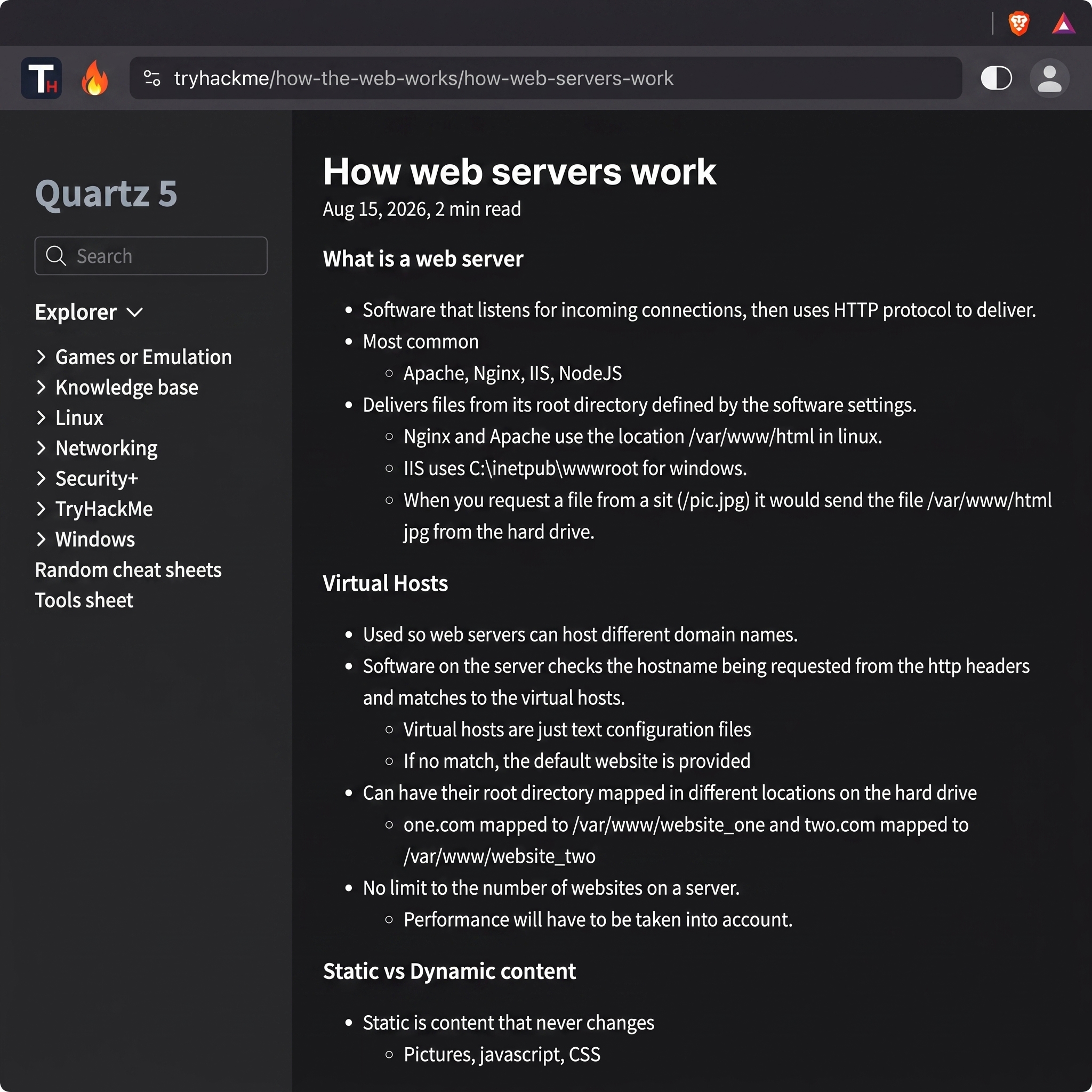
Rather than copying notes and carrying my laptop around everywhere, a domain name was the obvious solution. Utilizing a combination of GitHub and Cloudflare, accessing my notes from anywhere is just as easy as opening Google. Whether I keep the online version consistently up to date is a problem for another day... But it was fun to make!